


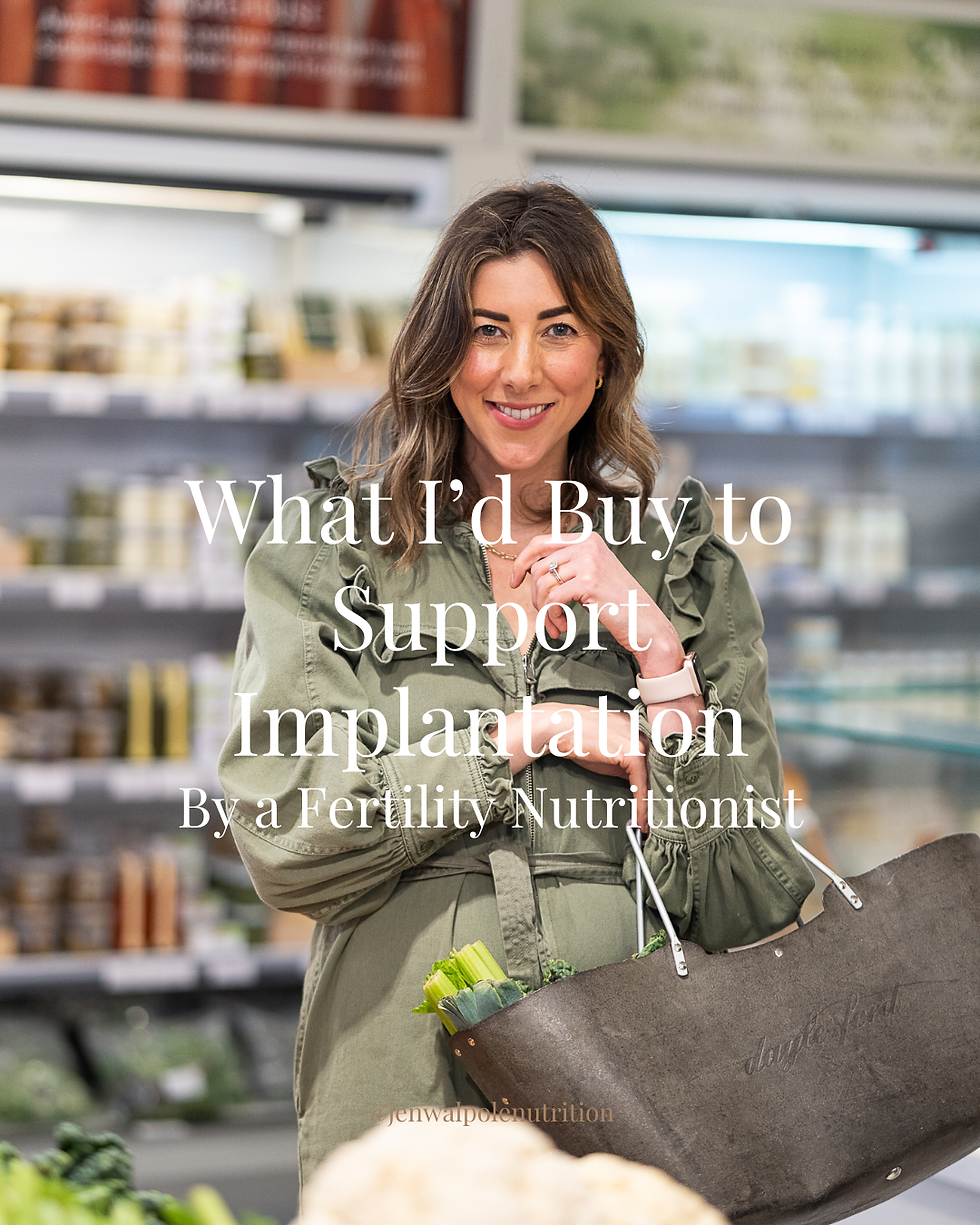
What Foods I’d Buy To Support Implantation


When you’re preparing for embryo transfer or hoping to support natural implantation, it’s completely natural to want to optimise your chances.
Whilst there is no single food that can guarantee implantation or pregnancy, nutrition plays an important role in creating a supportive environment for your hormones, endometrium, egg health and overall reproductive health.
If I was filling my basket with fertility-supportive foods, these are some of the foods I’d prioritise.
Watercress 🥬
Dark green leafy vegetables are some of the most nutrient-dense foods you can include when preparing for pregnancy.
Watercress is rich in folate, alongside other B vitamins and antioxidants that support methylation, an important process involved in DNA synthesis and healthy cell function.
Other options include spinach, rocket, kale and broccoli.
Grass-fed red meat 🥩
Quality red meat can be a valuable addition when preparing for implantation, particularly if iron stores need optimising.
Iron is essential for oxygen transport, and maintaining healthy iron levels is important before and during pregnancy.
Red meat also provides zinc, B vitamins and other nutrients involved in reproductive health.
Where possible, choosing higher-welfare, grass-fed options can be a great choice.
Citrus fruits 🍊
Oranges, grapefruit, lemons and other citrus fruits are rich in vitamin C.
Vitamin C acts as an antioxidant and also helps improve the absorption of plant-based iron from foods.
Supporting optimal iron status is particularly important when preparing for pregnancy.
Kiwi 🥝
Kiwi is another fantastic source of vitamin C and provides fibre to support healthy digestion.
This can be particularly helpful if you experience constipation or bloating, which can sometimes occur with progesterone supplementation during fertility treatment.
For extra fibre and nutrients, you can even eat kiwi with the skin on (after washing thoroughly).
Oily fish 🐟
Salmon, sardines, anchovies and mackerel are rich sources of omega-3 fatty acids.
Omega-3s support healthy inflammation levels and provide DHA, an important fatty acid involved in early baby brain development.
Aim for 2-3 portions of oily fish each week, choosing sustainably sourced options where possible.
Sheep’s yoghurt 🥛
Fermented foods can be a great addition to support gut health and microbial diversity.
Some people find sheep’s dairy easier to tolerate than cow’s dairy, particularly where there are individual sensitivities or inflammatory conditions such as endometriosis or PCOS.
As always, the best choice is the one that works well for your individual body.
Beetroot juice ❤️
Beetroot contains naturally occurring nitrates, which can support nitric oxide production and healthy blood flow.
When combined with ginger and watermelon, beetroot has been explored in small studies looking at potential effects on implantation outcomes.
Whilst more research is needed, it can be a delicious addition to a fertility-supportive diet.
Turmeric shots 🌱
Turmeric contains curcumin, a compound that has been studied for its anti-inflammatory properties.
For individuals with inflammatory conditions such as endometriosis, supporting healthy inflammation levels can be an important part of a wider fertility plan.
During fertility treatment or pregnancy, always discuss supplements with your healthcare team, food-based sources are often a safer and more practical option.
Almond butter 🌰
Almond butter provides vitamin E, healthy fats and minerals.
Vitamin E is an antioxidant that supports cellular health and has been linked with supporting endometrial health.
Adding a spoonful to porridge, smoothies or snacks is an easy way to include more nutrient-dense fats.
Brazil nuts 🌰
Brazil nuts are one of the richest dietary sources of selenium.
Selenium plays an important role in thyroid function and antioxidant defence, both of which are relevant when preparing for pregnancy.
Just one to two Brazil nuts per day is usually enough to meet selenium needs.
85% dark chocolate 🍫
Because fertility treatment can be an emotional journey, and joy matters too.
High-quality dark chocolate is a source of antioxidants, magnesium and iron, making it a lovely option when enjoyed as part of a balanced diet.
A little bit of pleasure and enjoyment is absolutely part of nourishing yourself through this process.
Remember...
Supporting implantation is not about creating the “perfect” diet or eating a specific list of foods every single day.
It’s about consistently providing your body with the nutrients it needs to support hormone health, blood flow, healthy inflammation levels and overall reproductive wellbeing.
Small, consistent choices add up, and food should also bring enjoyment, especially during what can be a stressful and emotional time.
If you’re preparing for IVF or trying to optimise your fertility, a personalised approach can help identify where your nutrition and lifestyle may be best supported for your individual journey. Book a free call with us at Jen Walpole Nutrition to find out more.


Comments